

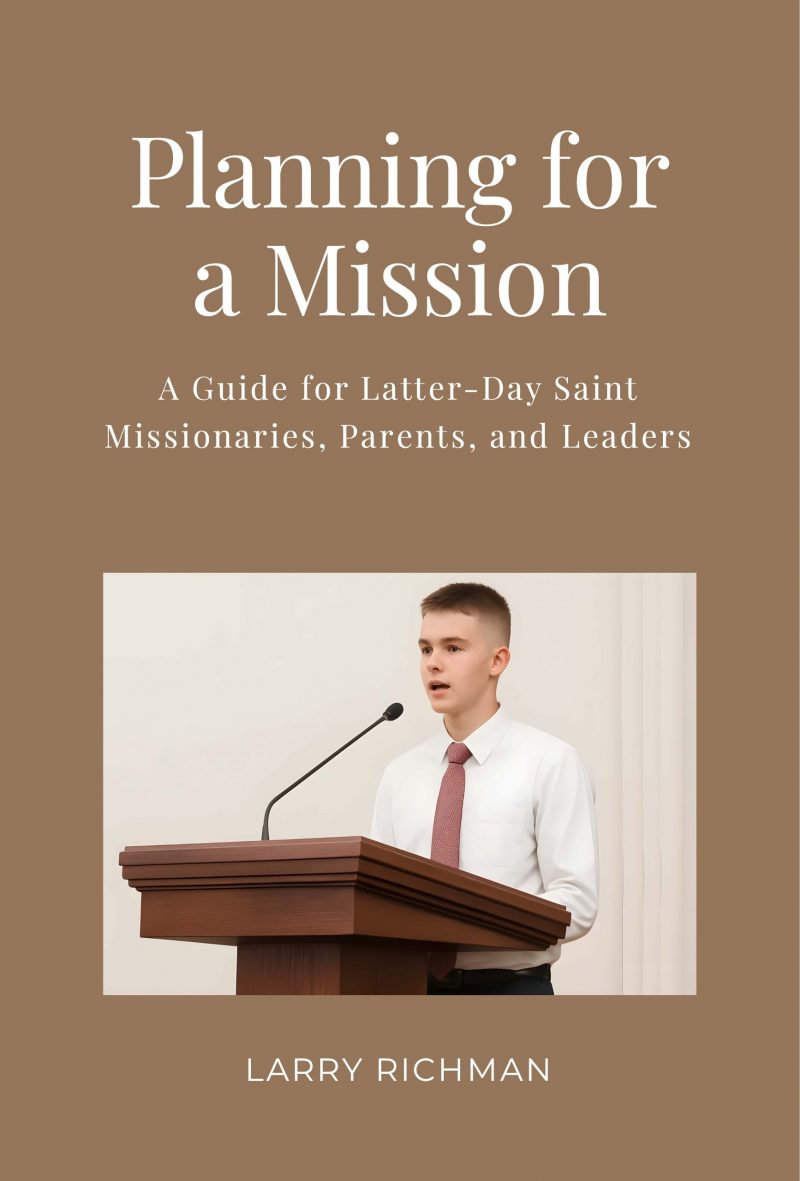
Planning for a Mission: An Overview for Latter-Day Saint Missionaries, Parents, and Leaders is a step-by-step guide that covers everything you need to know from deciding to serve a mission, to submitting a missionary recommendation, to receiving your call, and leaving on your mission.
Why I Wrote This Overview
Serving as senior missionaries in South Africa, my wife and I were tasked by the Area Presidency to help young men and women learn how to navigate the steps involved in submitting a missionary recommendation and getting themselves on a mission. This overview outlines those steps.
The overview appears in text below and is also available as a downloadable 6-page PDF. A more detailed version of the guide is available as a 32-page book with reflection questions and spaces for prospective missionaries to be more thoughtful and intentional in making a decision to serve a mission and in keeping track of the steps involved in submitting a missionary recommendation, receiving a call, and leaving on a mission.
See other how-to guides on LDS365.
Planning for a Mission: An Overview for Latter-Day Saint Missionaries, Parents, and Leaders
Serving a mission for The Church of Jesus Christ of Latter-day Saints is one of the most meaningful and life-changing experiences you can have. It is a period of dedicated service to the Lord that strengthens faith, builds character, and blesses countless lives. Effectively preparing for a mission requires spiritual, emotional, physical, and logistical preparation.
Effectively preparing for a mission requires spiritual, emotional, physical, and logistical preparation. Preparing thoroughly—spiritually, emotionally, physically, and logistically—will help you to focus fully on serving the Lord and His children.
Although this guide is written directly to young men and women, its principles also apply to senior missionaries.
Deciding to Serve a Mission
Choosing to serve the Lord is deeply personal. Seek His guidance through prayer and scripture study.
- Read the scriptures daily, especially passages about missionary work, such as Alma 29, Doctrine and Covenants 4, and Matthew 28:19–20.
- Attend church and participate in callings. Missionary service grows out of consistent discipleship.
- Talk with trusted family members and leaders. Parents, seminary teachers, and priesthood leaders can help you evaluate your readiness.
Serving a full-time mission is a priesthood duty for young men. Young women who desire to serve are encouraged to serve.
Consider mission types:
- Proselyting missions (traditional 18–24 months of teaching and service).
- Service missions (for those who may not be able to serve proselyting missions due to health or other factors).
- Church-service volunteer assignments (for adults or seniors who want to serve part-time or in special roles).
Although not all missions look the same, the Lord accepts your offering when you serve with a willing heart, regardless of the type of mission.
Qualifications for Serving a Mission
- You must be a confirmed member of the Church for at least one year before your mission begins.
- Young men must be at least 18 years old, but not more than 25 years old.
- Young women must be at least 18 years old, but not more than 29 years old.
- You must have completed or are no longer attending high school (or secondary school).
See the Church webpage ChurchofJesusChrist.org/callings/mission/mission-timing for tools to help you plan when to submit your missionary recommendation.
Talking with Your Bishop
The first step is to schedule an interview with your bishop. The bishop’s role is to:
- Assess your spiritual worthiness. This includes living the law of chastity, paying tithing, keeping the Word of Wisdom, and sustaining Church leaders.
- Address unresolved sins. The repentance process may need to occur before a mission call is extended.
- Offer guidance on mission type. Sometimes health, mental wellness, or other considerations may make a service mission more appropriate.
Submitting a Missionary Recommendation
Young members may submit missionary recommendations 150 days before they turn 18, as long as the mission start date is after their 18th birthday.
The mission recommendation is completed online through the Missionary Online Recommendation System. The bishop and stake president help guide this process.
Steps:
- Initial interview with the bishop. The bishop confirms worthiness by asking the Interview Questions for Prospective Missionaries. (See General Handbook,4.2.) The bishop then initiates the recommendation at MissionaryRecommendations.ChurchofJesusChrist.org.
- Complete the recommendation. Go to ChurchofJesusChrist.org.
- Medical and dental evaluations. Print the medical and dental forms and take them to your physician and dentist, who will fill out and sign the forms. Take a photo of the forms and any documents they give you and upload them to the online recommendation. When the recommendation is complete, click to submit it to the bishop.
- Bishop interview. He confirms worthiness and readiness to serve, enters his comments, and submits the recommendation to the stake president.
- Stake president interview. He reviews worthiness and readiness to serve, enters comments, and submits it.
Tips:
- Begin early. Medical and dental appointments may take weeks.
- Double-check accuracy. Mistakes can delay your call.
- Ask your parents to help with documents and health records.
Receiving and Opening Your Mission Call
You will receive an email when your mission call is available on the online missionary portal. Many missionaries gather family and friends for a special moment. Some open privately with parents first, then announce it publicly.
Read the call letter and click to accept the call and write an acceptance letter.
Along with the letter there will be information about clothing and other things you need to take on your mission, along with information about needed vaccinations and visas. Read all the information carefully so you can meet the required deadlines.
Tip: Focus less on the geographic location and more on the privilege of serving wherever the Lord calls.
Continued Preparation
After receiving your call and before entering the MTC, it is critical to continue preparing spiritually and emotionally.
- Study daily. Focus on the Book of Mormon, Preach My Gospel, and the words of living prophets.
- Develop habits. Wake up early, exercise, and practice technology discipline.
- Practice teaching. Role-play lessons with family, youth leaders, or returned missionaries. Serve with missionaries in your home ward whenever possible.
- Financial preparation. Save money, learn budgeting, and practice living simply.
- Avoid harmful distractions. Stay away from inappropriate media, bad influences, or risky activities that could jeopardize worthiness. Limit alone time with friends of the opposite sex.
Tip: Parents can set up family scripture study focused on missionary principles during this time.
Packing and Supplies
Along with your mission call letter, there will be information about clothing and other things you need to take on your mission. Follow these instructions carefully.
- Choose durable, modest, climate-appropriate suits, shirts, skirts, dresses, shoes, and outerwear as instructed.
- Study materials. Scriptures, Preach My Gospel, journal, notebook.
- Personal care. Toiletries, medications.
- Some missions allow smartphones or tablets provided by the Church.
Avoid overpacking. Simplicity is key. Don’t bring valuables or items beyond the instructions.
Vaccinations and Medical Preparation
Along with your mission call letter, there will be information about any required or recommended vaccinations. Some countries require specific immunizations, such as yellow fever, typhoid, or hepatitis.
If you take medication, arrange a long-term supply or transfer to mission pharmacy systems.
Exercise regularly, get dental work done, and practice good nutrition.
Tip: Keep a printed copy of your immunization records with your travel documents.
Visas and Travel Documents
Along with your mission call letter, there will be information about passports, visas, or other travel documents needed. Read all the information carefully so you can meet the required deadlines for applying for passports and visas. The Church helps secure missionary visas, but you may need to supply documents or attend interviews.
Tip: Keep your passport, call letter, and itinerary safe in a folder or envelope.
The Temple Endowment
You should receive your temple endowment before departure. Learn about the temple endowment at temple.ChurchofJesusChrist.org. Attend a temple preparation class in your ward or stake.
Talk with your bishop about the possibility of serving as a temple worker before your mission begins. This can help deepen your spiritual preparation.
Missionary Farewell
The term missionary farewell is no longer used in the Church. The bishopric will invite you to speak in a regular sacrament meeting before beginning your mission. You will be invited to speak about Jesus Christ, His restored gospel, and the joy of sharing the gospel and serving others.
Your family members and friends are not normally invited to speak at the same meeting, and the regular time of the meeting is not extended.
Avoid anything that may distract from the sacred nature of the sacrament meeting or create unnecessary expenses. For example, you should not:
- Print special sacrament meeting programs.
- Form a reception line after the meeting.
- Hold open houses, except for family gatherings. If a family gathering is held, it is recommended that it does not conflict with Sunday meetings.
At-Home MTC
Many missionaries complete part of their Missionary Training Center (MTC) experience online at home.
What to expect:
- Virtual classes with teachers and companions.
- Language training if assigned.
- Strict daily schedule (study, companionship planning, practice teaching).
Tips:
- Create a quiet, dedicated workspace.
- Treat it with the same reverence as in-person MTC time.
Leaving for the Mission Field
Just before you leave on your mission or begin at-home missionary training, the stake president will set you apart as a missionary.
Families typically say farewell at the airport. You will then travel to the MTC or directly to the mission field.
Tip: Avoid prolonged, emotional goodbyes. Keep it spiritual and uplifting.
Once in the mission field, missionaries email home weekly and may call or video chat on preparation days.
Role of Parents and Leaders
Parents and leaders have vital responsibilities
Parents:
- Support emotionally and financially.
- Model gospel living at home.
- Provide encouragement with letters, packages, and prayers.
Leaders:
- Prepare youth early through service and teaching opportunities.
- Provide priesthood blessings before departure.
- Follow up with returning missionaries to help with reintegration.
Making the Mission a Meaningful Experience
Ultimately, preparation is not just about logistics. It is about consecration.
- Focus on discipleship. Serving a mission is less about “checking boxes” and more about becoming like Christ.
- Develop resilience. Missions include rejection, hard work, and sacrifice. Prepare emotionally to endure challenges.
- Treasure the relationships. Companions, members, and investigators will shape your life forever.
- Write regularly. Keep a journal and write weekly emails home. These records will bless future generations.
Conclusion
Serving a mission for The Church of Jesus Christ of Latter-day Saints is one of the most sacred callings in life. Preparing thoroughly—spiritually, emotionally, physically, and logistically—will help you to focus fully on serving the Lord and His children.
Resources for Further Study
- Preach My Gospel
- Missionary Portal at ChurchofJesusChrist.org
- Missionary Standards for Disciples of Jesus Christ
- General Handbook, chapter 24
Planning for a Mission: An Overview for Latter-Day Saint Missionaries, Parents, and Leaders, by Larry Richman. Copyright © 2025 by Century Publishing, LLC. All rights reserved. info@centurypubl.com Second Edition, December 2025.
This document was created by LDS365.com and is not a publication of The Church of Jesus Christ of Latter-day Saints.
This document may be distributed freely for personal, noncommercial use.
One of our daughters is preparing to serve and submit mission papers – just these few paragraphs have helped me (a RM of more than 20 years) as a parent better understand what she is currently experiencing. Thank you for this