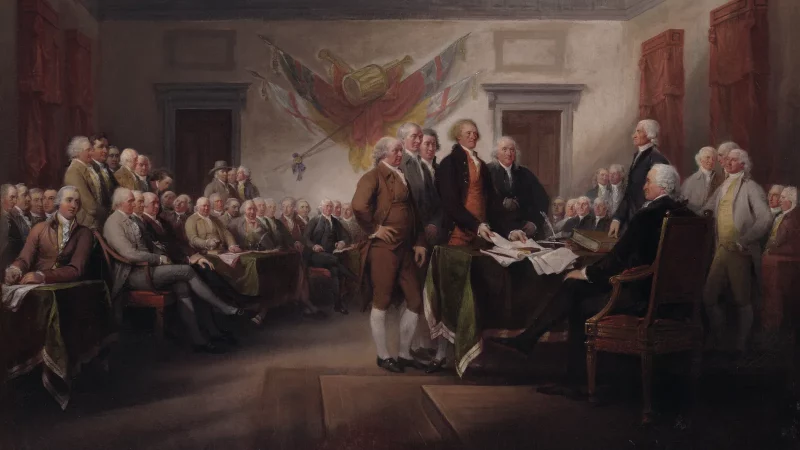
Yesterday, Latter-day Saint wards held a special fifth Sunday discussion about moral agency and how the U.S. Constitution and Declaration of Independence support religious liberty. To support that discussion, the Church provided a discussion guide, “Celebrating the Founding of the United States and the U.S. Constitution,” and a video. In the video, President D. Todd Christofferson and Elder Quentin L. Cook discussed the significance of the Declaration of Independence, the Constitution, and related events that enabled the Restoration of the Church. The guide, video, and other resources are found in the Gospel Library under Books and Lessons, Religious Freedom.
The following key points summarize the themes and messages found in the discussion guide and video regarding the founding of the United States and the importance of religious freedom:
- Moral agency is central to God’s plan: Before the world was created, Heavenly Father gave His children agency so they could choose light and truth without compulsion. Jesus Christ championed this plan, and His atoning sacrifice makes it possible for individuals to use their agency to choose God.
- The US founding documents were divinely inspired: The Lord revealed that He established the U.S. Constitution and that the principle of freedom preserved in such documents belongs to all mankind.
- Preparation for the Restoration: The Lord spent centuries in “meticulous preparation” to create the conditions of freedom necessary for the Restoration of the gospel to occur in the latter days.
- Freedoms enabled key Restoration events: Without the specific protections guaranteed in the founding documents, foundational events—such as Joseph Smith’s First Vision and the organization of the Church—would not have been possible.
- Religious freedom is a universal right: The rights and protections preserved by the law and the Constitution are intended for everyone and should be maintained for people of all denominations.
- Religion fosters social stability: Society is held together not just by law, but by individuals who voluntarily obey moral principles because of their sense of accountability to God.
- Societal benefits of faith communities: Religious liberty allows faith communities to provide essential humanitarian assistance and teach character-building values like honesty, gratitude, and patience.
- Reducing social conflict: Protecting religious freedom leads to greater social cohesion and fewer conflicts, as it allows people with profound disagreements to live together in peace.
- Universal duty to defend freedom: The work of defending the Constitution and religious freedom is not limited to legal scholars; it is a responsibility for everyone in their personal and professional lives.
- Avoiding political judgment: Members are encouraged to refrain from judging one another’s political affiliations, as no single party or candidate can satisfy every personal preference or priority.
- Call to a unified fast: The First Presidency has invited members to participate in a unified fast on July 5, 2026, to express gratitude for religious liberty and pray that it be strengthened throughout the world as the United States celebrates its 250th anniversary.
Related resources:
- “Religious Freedom” in the Gospel Library.
- ReligiousFreedomLibrary.org, an online collection of talks and statements about religious freedom by Church leaders and others.
- Read about principles of freedom in the book American Principles of Freedom: A Latter-day Saint Perspective, which celebrates the 250th anniversary of the United States of America. #America250
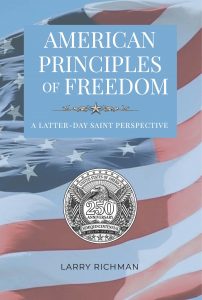
How to access the book
- Read or download a free PDF.
- Purchase on Amazon as a paperback for only $8.95 or get as Kindle or audiobook free with your membership
- Purchase on Lulu as a paperback for only $8.95