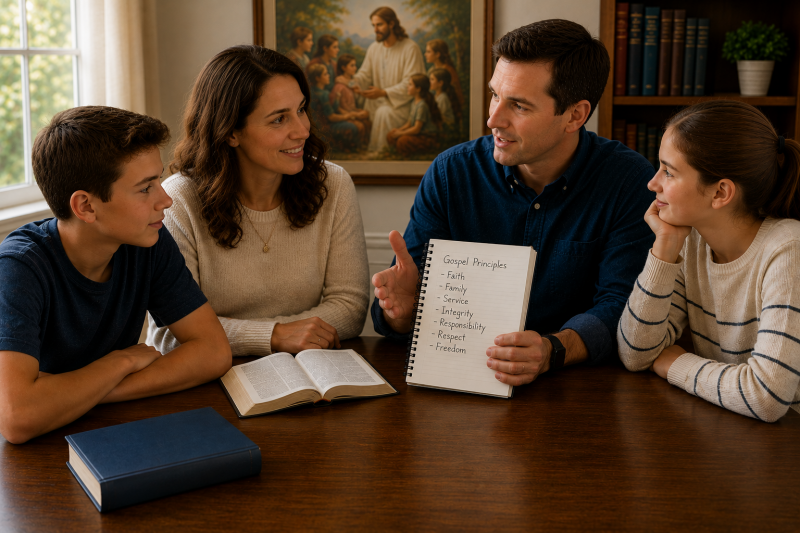
Modern prophets have repeatedly taught the importance of freedom, agency, and constitutional principles. Learn why liberty matters in God’s plan.
This article is one in a series about principles of freedom and religious liberty. It is based on principles from the book American Principles of Freedom: A Latter-day Saint Perspective, which celebrates the 250th anniversary of the United States of America. Read other articles in the series #America250
Modern prophets have spoken often about freedom, agency, and the Constitution. Their teachings are not primarily political. They are spiritual. They focus on God’s plan, moral agency, personal responsibility, and the conditions needed for the gospel to flourish.
Latter-day Saints believe agency is one of God’s greatest gifts. Because agency matters so much, freedom matters too. The scriptures teach that agency was central even before mortality began. Satan sought to destroy agency, while Heavenly Father defended it. The Lord declared, “Wherefore, because that Satan rebelled against me, and sought to destroy the agency of man, which I, the Lord God, had given him,… I caused that he should be cast down.” (Moses 4:3)
Because agency matters eternally, modern prophets have repeatedly taught the importance of protecting freedom.
Freedom and the Constitution
President Dallin H. Oaks taught, “The United States Constitution is unique because God revealed that He ‘established’ it ‘for the rights and protection of all flesh’ (Doctrine and Covenants 101:77; see also verse 80).” (“Defending Our Divinely Inspired Constitution,” April 2021 General Conference)
Church leaders have consistently taught respect for constitutional principles, such as religious liberty, rule of law, protection of individual rights, moral responsibility, and participation in civic life.
The Church itself remains politically neutral. Members belong to many political viewpoints and parties throughout the world. But the Church strongly supports principles that preserve freedom and human dignity. President Oaks taught that the United States Constitution contains at least five divinely inspired principles (see “Defending Our Divinely Inspired Constitution, April 2021 General Conference):
- The source of government power is the people.
- The division of delegated power between the nation and its subsidiary states.
- The separation of powers.
- Individual rights and specific limits on government authority
- We are to be governed by law and not by individuals, and our loyalty is to the Constitution and its principles and processes, not to any office holder. All people are to be equal before the law.
The Church’s General Handbook says, “In accordance with local laws, members are encouraged to register to vote and to study issues and candidates carefully. Principles compatible with the gospel may be found in various political parties. Latter-day Saints have a special obligation to seek out and uphold leaders who are honest, good, and wise (see Doctrine and Covenants 98:10). The Church is neutral regarding political parties, political platforms, and candidates for political office. The Church does not endorse any political party or candidate. Nor does it advise members how to vote.” (General Handbook, 38.8.31)
Freedom Requires Responsibility
Modern prophets have repeatedly taught that freedom and responsibility belong together. They warn that liberty cannot survive without moral character and self-government. Freedom is more than just a political concept. Freedom is a spiritual principle.
The founders of the United States understood this principle as well. Self-government works best when citizens practice honesty, self-control, accountability, and respect for others. Strong families and faith communities help teach those virtues. We have a responsibility to be active in civic affairs and to support good and honest government.
Religious Freedom Matters
Modern prophets have especially emphasized religious freedom. They encourage us to defend the rights of all people to worship according to conscience. At the same time, we must also practice tolerance and respect toward others whose beliefs, values, and ideas differ from our own.
Religious freedom protects more than church attendance. It protects the ability to speak, teach, serve, raise families, and live according to sincerely held beliefs. Without freedom, moral agency becomes harder to exercise.
What This Means for Us
Modern prophets teach that freedom is both a blessing and a responsibility.
Latter-day Saints can help preserve liberty by:
- Studying the scriptures and the Constitution
- Respecting the rights of others
- Staying informed about civic issues
- Participating responsibly in society
- Teaching truth in the home
- Speaking with kindness and courage
For Latter-day Saints, freedom is more than a political topic. It is closely connected to agency, accountability, family life, and the ability to choose righteousness.
Learn more:
- Articles about about religious freedom and moral agency.
- Read the book American Principles of Freedom: A Latter-day Saint Perspective.
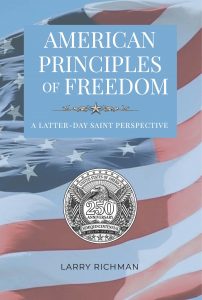
How to access the book
- Read or download a free PDF.
- Purchase on Amazon as a paperback for only $8.95 or get as Kindle or audiobook free with your membership
- Purchase on Lulu as a paperback for only $8.95